Costa Rica Expat Tours

find your new life in paradise

  • Home
  • Expat in C.R.
    • Costa Rica Expat Haven
    • The 4 C’s Framework
    • Take the Tour Before You Buy!
  • Our Tours
    • Costa Rica Expat Consulting
    • Exploratory Rental Search
    • Book Your Tour
    • Testimonials
  • Blog & Podcast
    • Blog Archive
    • World Changers Expat Podcast
    • The Definitive Guide -2nd Edition
  • About
    • Costa Rica Expat Properties
    • Costa Rica Commercial Real Estate

Archives for August 2016

Manuel Antonio In a Nutshell

August 25, 2016 by Costa Rica Guy Leave a Comment

Manuel Antonio in a Nutshell

This post is the lead-in to a series I plan to do on Manuel Antonio. This one offers a Manuel Antonio overview, or a Manuel Antonio in a Nutshell…

Wait, It’s Not on the Map?

Manuel Antonio is a tiny strip of tropical terrain that extends out into the Pacific just outside of the town of Quepos, on Costa Rica’s southern Pacific coast. It is located in the province of Puntarenas and in the canton of Aguirre. Costa Rica’s coastal highway, known as the “Costanera”, stretching from Orotina to where it meets up with the Pan American Highway in Palmar Norte, runs right by the outskirts of Quepos. This is a very well-maintained and paved stretch of highway, perhaps one of Costa Rica’s best. So, getting to Manuel Antonio from San Jose, a trip of only about 100 miles, is quite easy and these days takes roughly 2.5 hours. Playa Jaco, another popular tourist beach, is about an hour away to the north. Playa Dominical, a popular beach with surfers and nature enthusiasts, is about a half-hour south. There is also a domestic airport just outside of Quepos, with multiple daily flights from San Jose that are are quick and affordable.

A Few Things You Might Not Know

If you look on the map for Manuel Antonio, you’ll likely only see the little town called Quepos. That’s because Manuel Antonio is really just the name of the small, but wildly popular, national park that sits at the end of the tiny strip mentioned above. People often get confused on this point, but in a sense, Quepos and Manuel Antonio are the same place. However, in many respects, they are vastly different.

Quepos is a small town of around 20,000 inhabitants. The name originates from the indigenous people that inhabited the region during colonial times. Quepos is primarily a fishing village. However, it has grown over the years and now features a marina, as well as many dining, shopping and nightlife options for tourists.

The Park
Manuel Antonio in a Nutshell

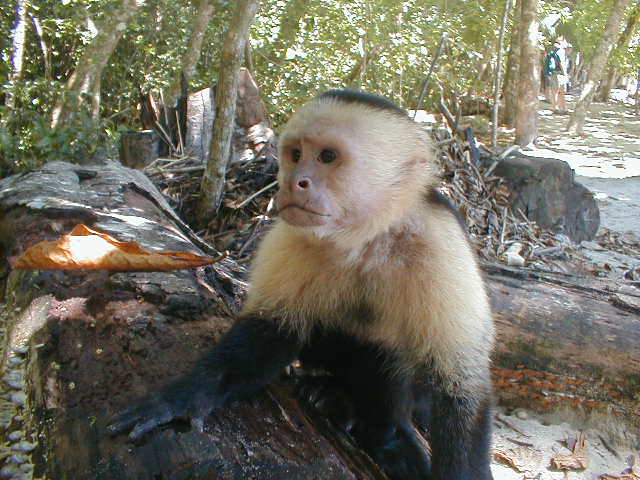
The big tourism draw in Manuel Antonio is, of course, the national park. The park was created in 1972 and is the smallest, but most popular, of Costa Rica’s national parks. The park encompasses roughly 4,000 acres of land. In comparison, Corcovado National Park contains 104,900 acres. It is home to many of the jungle animals that Costa Rica is famous for. In the park you’re very likely to come across three species of monkeys: the spider, capuchin (white-faced) and howler varieties all live there. You can also see sloths (both two and three-toed), boas, pizotes (in the raccoon family), 100’s of bird species, and many other animals. In the tiny area of the park there are some 109 species of mammals and 184 species of birds. Because of the small area, it’s quite easy to cover many of the hiking trails throughout the park in a day and you’re almost guaranteed to see animals. After all, they don’t have much room to hide! That’s why the park has been such a hit with tourists and has made Manuel Antonio one of the “crown jewels” of Costa Rica tourism.

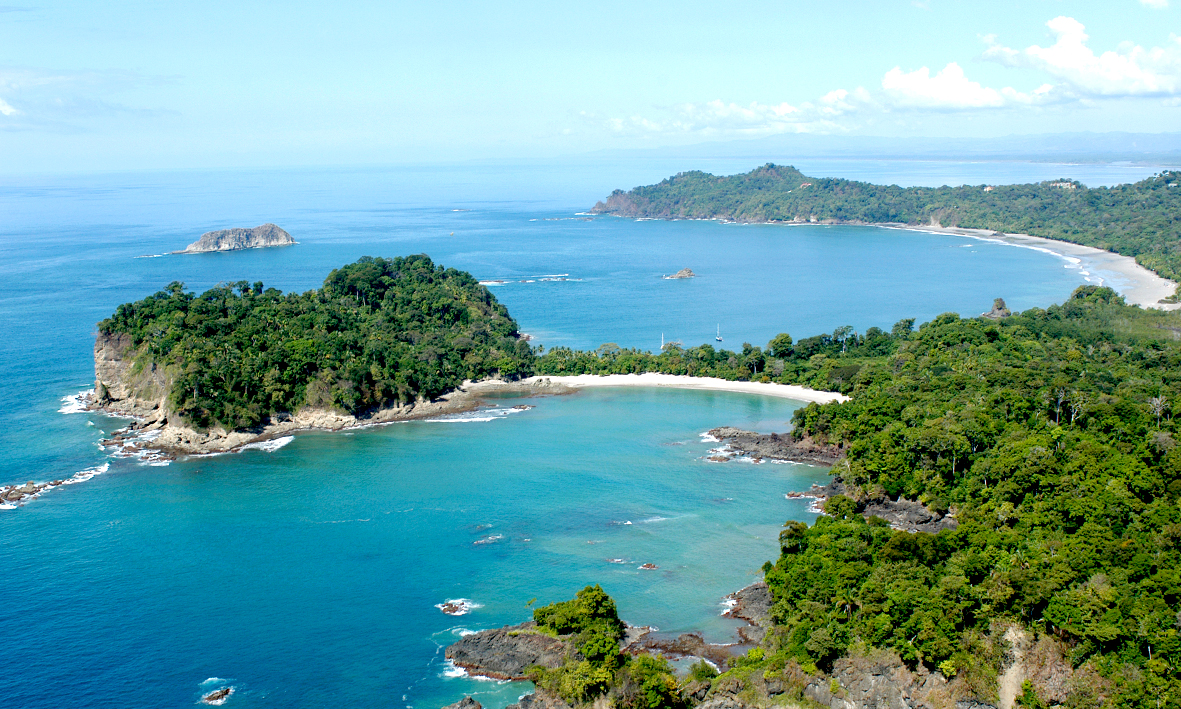
In addition to nature watching, the park features some gorgeous beaches. The four beaches in the park, Espadilla Sur, Manuel Antonio, Escondito and Playita, are some of the best in the country. At 236 feet in height, Cathedral Point, which lies between Playa Espadilla Sur and Playa Manuel Antonio, provides a panoramic view of the surrounding area and blue ocean waters. In 2011, Manuel Antonio was listed by Forbes as among the world’s 12 most beautiful national parks.

What Else is in Manuel Antonio?
Manuel Antonio in a Nutshell

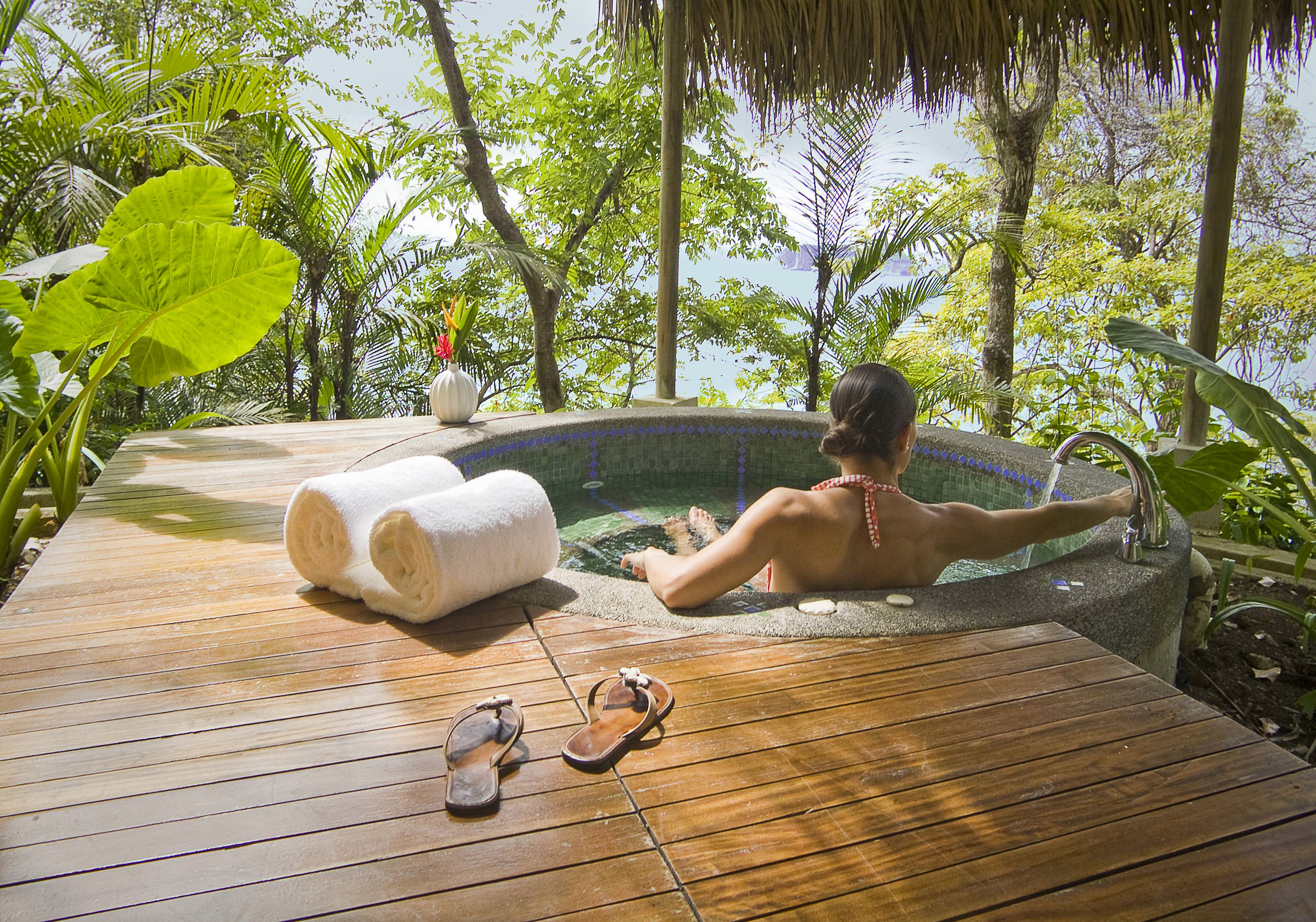
Okay, so we’ve talked about the major attraction, the beautiful national park, but what else? The draw of the park has created one of Costa Rica strongest tourist attractions. As a result, Manuel Antonio has grown by leaps and bounds in a very small space of time and land area. There are now multiple hotels of all ratings, from hostels to 5-star luxury resorts. There are numerous restaurants, bars and discos providing a vibrant nightlife, as well as many funky boutique shops. Street vendors peddling a wide variety of home-made arts and crafts are also a common site. Manuel Antonio has pretty much everything the tourist could want and expect from a Costa Rica beach resort location. Despite the growth, Manuel Antonio has been able to maintain its natural tropical feel. You are very likely to wake up from your hotel room to the sounds of the monkeys playing in the trees just outside.

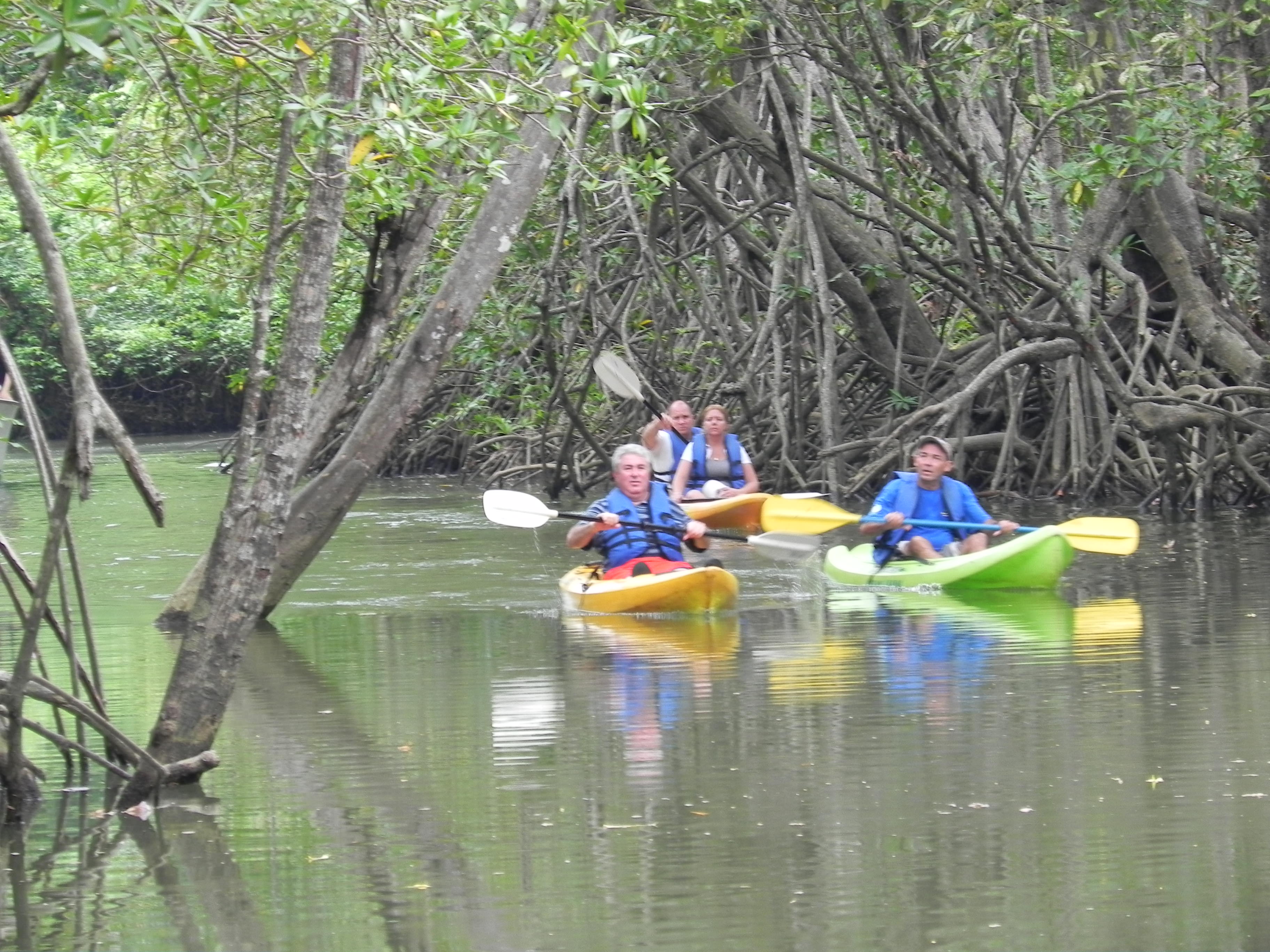
There are many area attractions as well. From extreme sports like white water rafting on the Naranjo River, to more gentle river cruises around the Damas Island Mangrove Estuary or on the Rio Savegre. There are several popular canopy tours in the area. Other popular tours include snorkeling, ATV, waterfall hikes, horseback rides, local culture tours, etc. The national park can be experienced with an organized tour, or you can just go on your own. Naturalist guides can be hired for a modest sum at the park entrance. It always pays to trek through the park at least once with a guide, as they can show you things you’d never know were there on your own. Manuel Antonio is a Costa Rica natural playground with a touch of the high class, which is why the tourists keep flocking there year after year in increasing numbers.

The Future Outlook
Manuel Antonio in a Nutshell

Manuel Antonio has changed over the years, but in many ways it retains its earlier remote tropical ambiance. In recent years developers have moved in and have begun to carve up the landscape with private enclaves for the wealthy. The small amount of developable area requires that development be relatively dense, compared to areas like Dominical to the south.

Manuel Antonio has become one of Costa Rica most upscale resort areas, more-so than nearby Jaco or Dominical. It is probably not the preferred destination for tourists wanting to do Costa Rica on the cheap. Where will this growth lead Manuel Antonio in the future?

One thing’s for sure, if your talking about the “tiny strip”, as I’ve referred to it a couple times above, there’s just not much room for a lot more development and growth, unless it goes upwards and becomes even more dense. That type of development will likely be met with fierce local opposition. Proponents of continued growth will have to play a delicate balancing game between development and retaining the natural wonders that attract people to the area in the first place. Much of the growth will likely have to go towards Quepos and the surrounding area, as a result of the fact that there’s more room to grow in that direction.

I’ll conclude this piece on Manuel Antonio in a Nutshell with this thought…
Manuel Antonio is surely to remain one of Costa Rica’s top tourist attractions for years to come. And its aura as an attractive location for expats and foreign investors, will likely only increase as well.

Filed Under: Costa Rica Destinations, Costa Rica Expat Living Tagged With: manuel antonio

Costa Rica Living Mountains or Beach?

August 13, 2016 by Costa Rica Guy 6 Comments

Costa Rica Expat Living - Mountains or Beach?

If you’re considering a move towards Costa Rica expat living, or just an investment in Costa Rica, you might be wondering, which is better for Costa Rica living – mountains or beach?

Like a lot of people out there, I love both. But are both really possible?

Not really. Not if you’re talking about “real mountain living” versus “real beach living.”

Costa Rica Expat Living - Mountains or Beach?

I live in the town of San Isidro de El General, which is nestled in the valley between the towering Talamancas, Costa Rica’s highest mountain range, and the southern Pacific coast. I like to think that I have both, but in reality I am far removed from beach culture and it does take me anywhere from 45 minutes to an hour to get from my front door to the ocean. So, while I am close, I ain’t quite there.

And if it’s not possible to have both here in San Isidro, it’s not really possible anywhere else. So, one has to make a choice. And this post is about helping you make that choice.

Since I do my Costa Rica expat living in the mountains and perhaps I am a little biased in favor of mountain life, I’ll start with…

Costa Rica Expat Living at the Beach

Pros…

Costa Rica boasts some of the best beaches imaginable. The surfing can be great, with waves for beginners, intermediate level and the true experts looking for the biggest, gnarliest rides out there. The beach culture is also a big plus for some. It’s more laid back and bohemian. Since the beach has long been the most popular area for expats to buy into, you can find a unique blend of gringo and tico culture co-existing down there. There you can find things you won’t find up in the mountains, which will be dominated by more of a traditional Costa Rican culture. Things like health food stores, international cuisine, funky bars and discos, lots of “hippie stuff”, etc., etc. All that can be pretty cool and it draws many down there.

Here in the southern zone there is a smaller mountain range that more or less hugs the coast. So, it is possible to live up around 300 or 400 meters above the sea level, where you get spectacular ocean views and sunsets and cool ocean breezes. The flora and fauna along the coast, especially the southern Pacific, is dense tropical rain forest. So, there are a lot of critters lurking in there and it’s not surprising to wake up to the sound of monkeys playing in your backyard.

Sound enticing? Ok, but then there are the…

Cons…

The biggest drawback for most is the heat. It is hot, really hot, at sea level in Costa Rica. It’s true you always have the ocean, or your pool, to cool off in, but get ready for any trip to the market, or anywhere else, to leave you drenched in sweat.

The other aspect that could be a drawback for some, like me, is the unique culture that generally forms where you have a large group of foreigners congregating in a particular area of a foreign country. They tend to try to create a culture of their own. Here on the southern Pacific, Dominical is a great example. Dominical no longer resembles Costa Rica. For one, you’ll see more foreigners down there than locals. The businesses that have opened, while many are super cool for sure, just aren’t tico. And the prices are sky high as a result. At the beach expect to pay a hefty premium for just about everything, especially all that cool stuff!

There can also be a bit of a rift that forms between the ticos and the expats. This is usually lurking beneath the surface and is not readily apparent to the tourist only visiting for a few days. But if you live there, you’ll begin to notice. Sometimes this can result in bad things happening, like home break-ins and even violence. I don’t mean to be overly alarmist with this, but you have to understand that this is understandable when outsiders from other countries move into an area, jack up the price of everything, and thereby make life for the locals more difficult. Resentments can obviously develop as a result. Mutual respect is the key to avoiding this, but sometimes it is not given.

Costa Rica Expat Living in the Mountains

Pros…

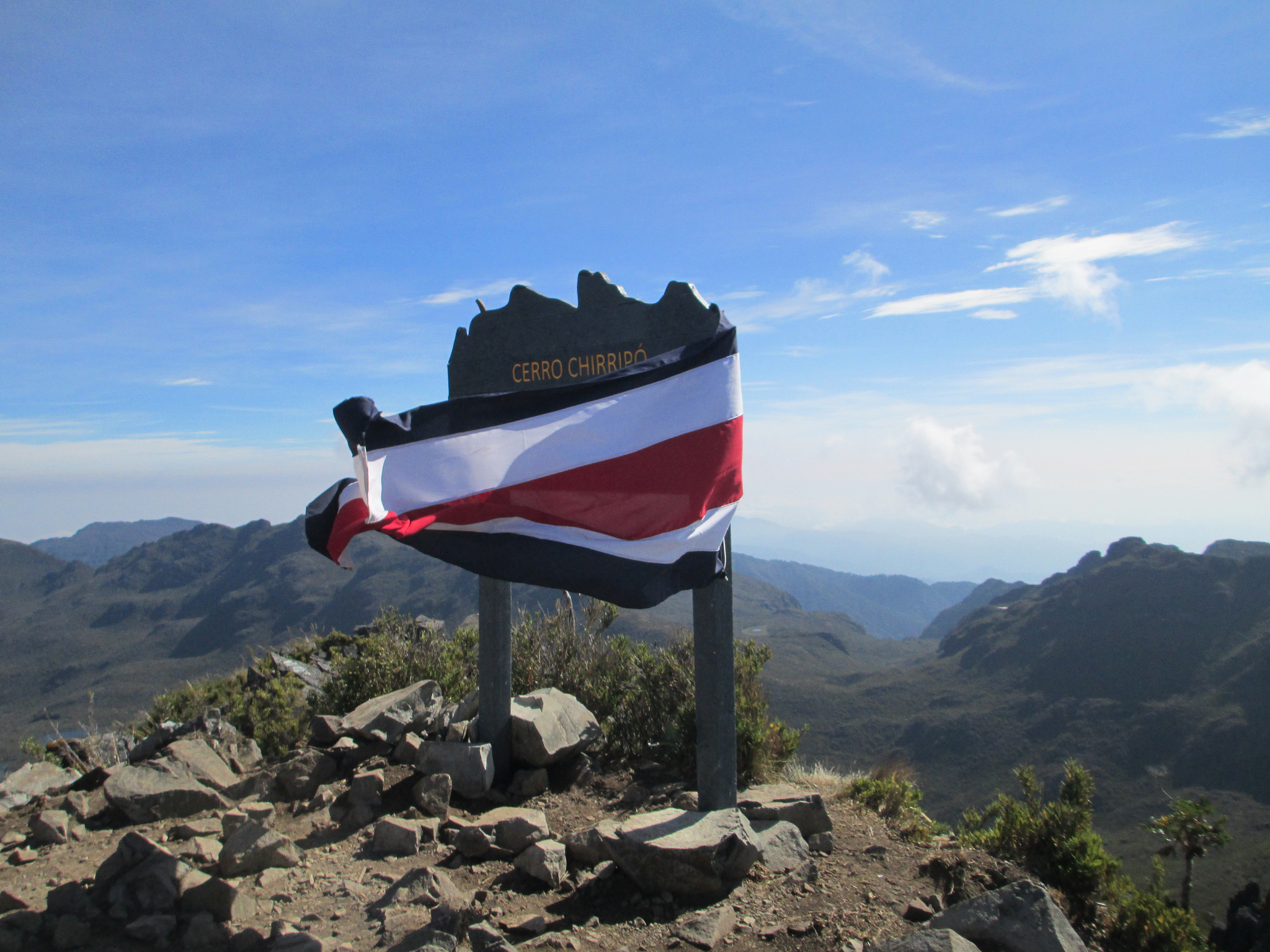
If you love mountains like I do, then you’re really going to love Costa Rica’s mountains. Unlike mountains in colder climates, Costa Rica’s are teaming with flora and fauna, of a different variety than what is found along the coast. Heck, just take a trek up to the summit of Chirripo, Costa Rica’s tallest mountain at around 12,500 feet. You will pass through virtually every eco-system that exists within the country, from tropical rain forest, to cloud forest, to the semi-barren desert-like eco-system known as the paramo, which exists well above the tree line in tropical climates. I love the beauty of Costa Rica’s lush green mountains. Even as a lifelong surfer who grew up on the Carolina coast, the mountains of Costa Rica are what drew me here and are what keep me here.

Even though in Costa Rica’s mountains you’re not “at the beach”, you’re still not far from it. I stare up at the Talamancas each morning, but also know that I can hop in my car and be sitting on my surfboard waiting for the next long barrel in less then an hour.

In addition to the natural beauty, I love the traditional tico culture that thrives in the mountains. That hardy, yet warm and gentle, culture is nowhere better represented than my home here in San Isidro de El General, in the canton, or county, of Perez Zeledon. Here the people are for the most part farmers and laborers and must rank as some of the most friendly people on earth. Costa Ricans in general, throughout the country, have that reputation and the ticos of this valley are certainly prime representatives.

With the mountains come rivers, waterfalls, little nooks and crannies where you can rejuvenate in the crystal clear and cold, but not too cold, fresh water.

The weather in Costa Rica’s mountains is about as perfect as you will find on the planet. I am talking low to mid 70’s, with little to no humidity. Down in the valley it can get quite warm, still no where near as hot as the beach, but warm. However, just drive less than 30 minutes up and it’s a whole different story. Many folks come here to live at the beach, but after a year or so, make a b-line to the mountains in order to escape the oppressive beach heat.

Prices of things are lower in the mountains. San Isidro de El General is a great example. This “little town” is actually Costa Rica’s second largest outside of the metropolitan area, or GAM, of the central valley. Here you can find anything you need and at pretty good prices. And that certainly holds true for real estate, both in terms of land, homes, and the cost to build.

OK, OK, I’m beginning to show my bias, so let’s talk about the…

Cons…

I guess the biggest one is that the mountains aren’t the beach. Except in certain rare cases, you won’t get ocean views. You will have to drive a ways to get to the beach, perhaps further than some would like. The culture of the mountains is more traditional tico, not the “fusion culture” discussed above that the beach environment gives rise to.

During the rainy season, which lasts 7 months out of every year, from May through November, the clouds and rain come every afternoon. And it all starts in the mountains. In fact, the mountains act as a bit of a buffer to hold the clouds and rain back for a time before they finally reach the beach later in the day. So, in the mountains you will tend to get more clouds and more rain.

If you get up high enough, the mountains can get downright cold at night. Even cold enough where a nice cozy fireplace can be a very good idea. That might be a drawback for some people…certainly not for me.

So, there you have it. My two cents of opinion on the pros and cons of Costa Rica expat living mountains or beach. I’ll let you make up your own mind about which version of Costa Rica expat living is right for you.

Filed Under: Costa Rica Expat Living Tagged With: costa rica beaches, costa rica expat living, Costa Rica Expats, Costa Rica Mountains

Connect with Costa Rica Expat Tours

  • Facebook
  • Flickr
  • Instagram
  • LinkedIn
  • Pinterest
  • Home
  • Expat in C.R.
  • Our Tours
  • Blog & Podcast
  • About

Copyright © 2026 · Parallax Pro Theme on Genesis Framework · WordPress · Log in